Test Execution Screen Default View
Test Suite Execution screen enables Manual Testing and scheduling Automation Testing by QA teams. Test suites are executed on different platforms and the run results are marked on this screen. There are two views available for test execution screen - Default View and Detail View.
Executing Test Suites
To execute a test suite, perform the following steps:
Go to Test Suites Detail page.
Select the Test Execution tab.
Click the Execute icon.
Test Execution Screen Default View
The Test Execution screen displays the list of test cases covered under the test suite.
View, sort, and filter test cases using various parameters on the default view. This feature helps organize and streamline the test execution process.
Filtering Test Cases on Execution Screen
Filter test executions with basic and advanced filters. Refer filters to know more.
Sorting Test Cases on the Execution Screen
Click the column headers to sort test cases on the Test Execution screen.
Organizing Columns on the Execution Screen
Customize the columns on the execution screen by using the Arrange Column icon.
Note
View all user-defined fields, excet Large Text fields, for test cases. For test steps, even Large Test fields are supported.
Manage Grid Columns
View or hide the fields and columns can be rearranged by dragging and dropping. Refer Managing Grid Columns to know more.
Components of the Default Execution Screen
The default execution screen displays the test cases linked to the test suite. Expand the test cases to view test step details within it.
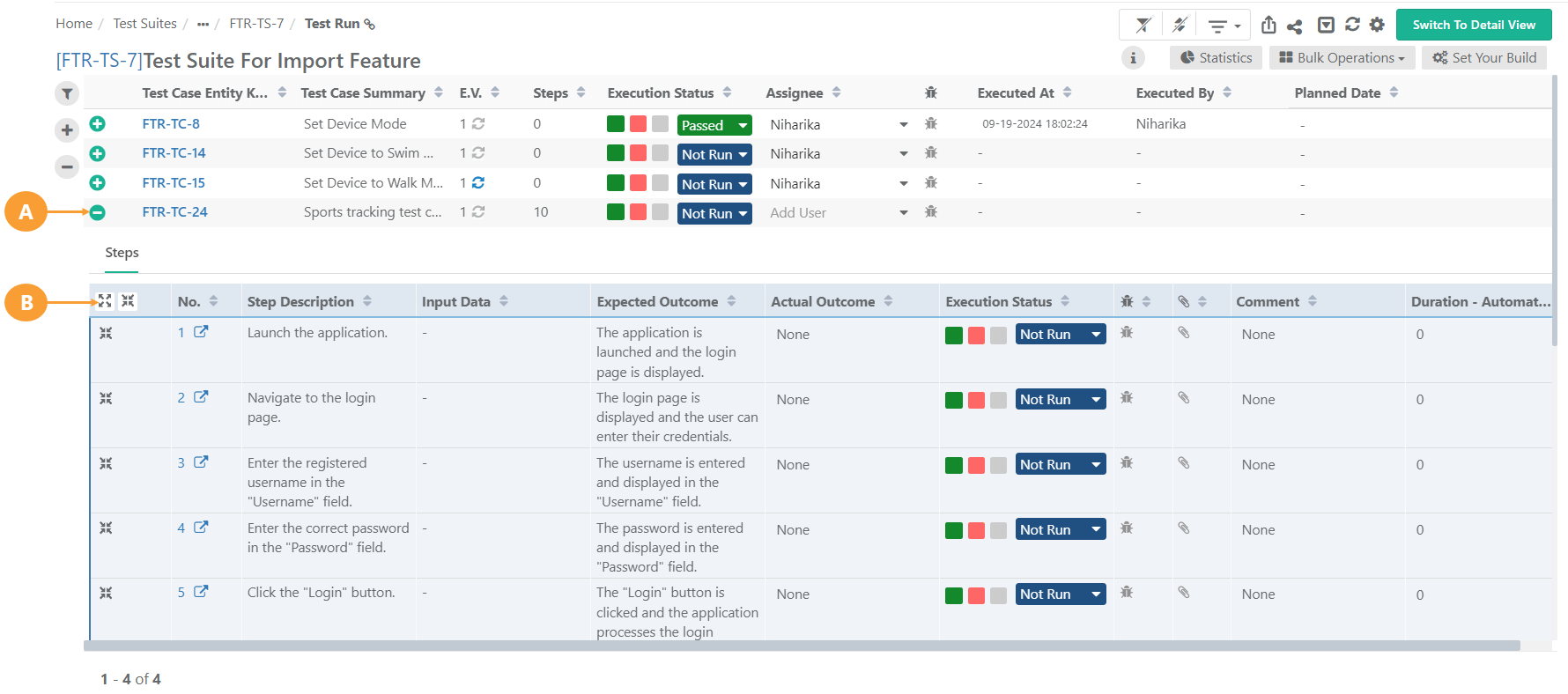 |
Click the information icon to view test suite details:
The platform against which the test is to be run.
Run Attributes: Tag Platform Attributes at run time. Read more about Tagging Attributes at Runtime in Managing Platforms.
Release: Release as selected for the test execution.
Cycle: Cycle as selected for the test execution.
Build: The Build on which the test is being executed.
 |
On this page, you can update the following parameters:
Assign tester : Open the drop-down and select a user to assign the test case.
Issues : Click the issue icon to add or link issues. Read more about Adding/Linking Issues to Test Case and Test Step.
Comments: Add or edit remarks to test case executions and tag users using @username. Tagged users receive an email when a comment is added or updated.
Attachments: For additional information, add attachments to the test case or test steps. Add multiple remarks to test case executions and tag users using @username. Tagged users receive an email when a comment is added or updated. Refer to Managing Attachments for more details.
Test Case: The attachments are added from the Test Case module. You can download the Test Case level attachments but cannot delete these attachments.
Execution: The attachments are added from the Execution screen. You can download or delete these attachments added at the Execution level.
Execution Type: Mark the Execution Type as automated or manual. By default, the execution type is set to "Manual".
Planned Date: Set the planned date for test suite execution manually.
Execution At: Add or modify the execution time and date from the Execution At column.
Note
To set execution time manually, the admin must configure the following settings:
Go to Administration and select General Setting.
Go to the Edit Execution Time section.
Set the Allow Manual Edit of Last Executed Date or Time flag to On.
The Executed At field is editable only if this flag is turned On.
Change Date and Time at two levels: Individual test cases and bulk test cases through Bulk Operation.
Set Up Vs Attended Time
Enter Actual Setup Time and Actual Attended Time for each test case on the execution screen. Refer to Tracking Actual Execution Time with Stopwatch Timer to know about timer settings.
Execute Individual Test Cases
Execution Status of test case and test step depends on the Derive Test Case Execution status from Test Case step status settings in the Project module. The settings remain “On” by default, which derives test case execution status from test case step status and vice versa.
Disable auto-deriving execution status from Project Settings. Refer to Project Management for more details.
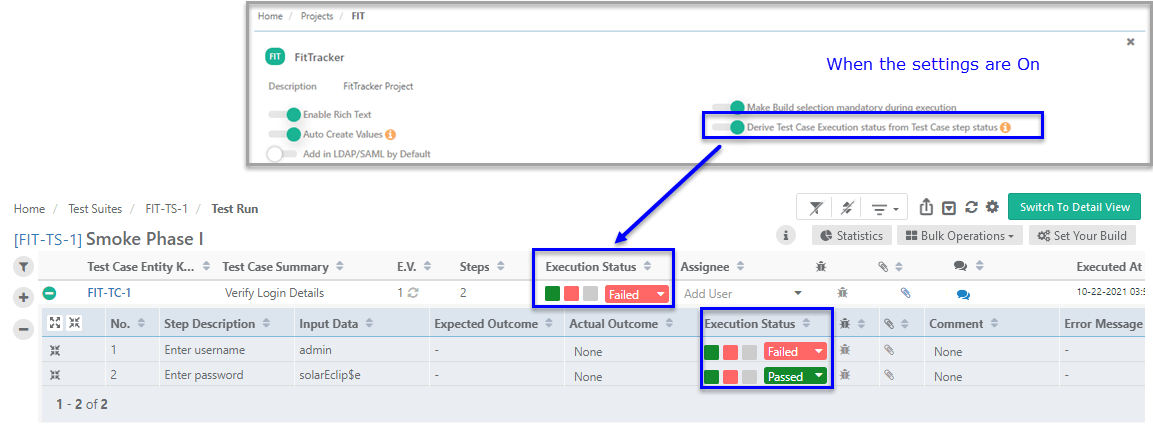 |
When Derive Test Case Execution Status from Test Case Step Status settings are turned “On”: The test case execution status derives from test case step status and vice-a-versa as per the set priority of Execution Status as described in Execution Status Management.
When Derive Test Case Execution Status from Test Case Step Status are turned “Off”, you need to manually change the status of the test case.
Execution Status of Test Cases with Parameterized Values
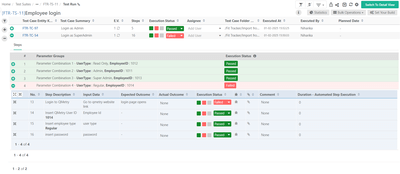
View the execution status at the parameter group combination level when executing parameterized test cases on the execution screen.
As a tester analyzing a failed test case execution with multiple parameter group combinations, you can quickly identify both the failed parameter combinations or unexecuted cases with a "Not Run" status.
 |
Note
The execution status for parameter groups is displayed for projects in which the Derive Test Case Execution Status from Test Case Step Status setting is enabled.
Only the consolidated execution status for each parameter group combination is displayed based on the test step execution performed for that combination. This execution status is not editable.
The execution status of each parameter combination follows the similar status prioritization logic used to calculate the test case execution status. Refer Execution Status Management to know more.
View Execution Statistics
To view execution statistics, perform these steps:
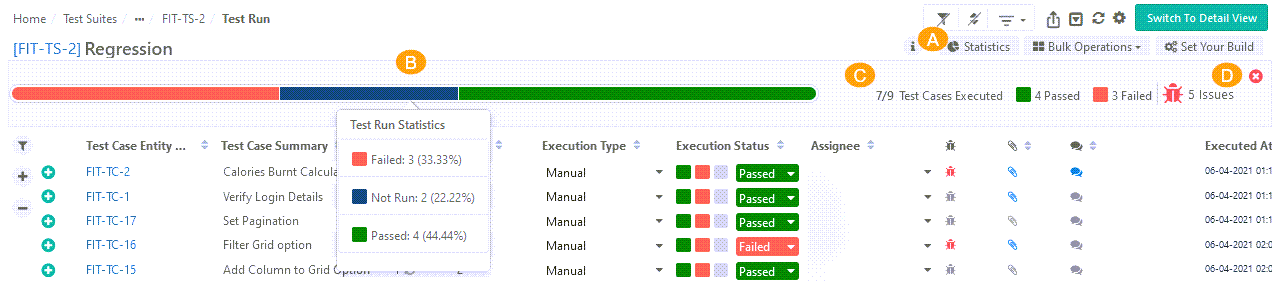 |
Go to the Test Execution Default View.
Click Statistics.
Note
The system generates the status bar based on the status of each test case execution (i.e., Not Run, Passed, Failed, Blocked, Not Applicable, any other user-defined status) of each test case.
Creating New Build
To create builds from the Execution screen, perform these steps:
Click .
Select the test cases to apply the build and select the build from the drop-down.
Click to open Builds section under Projects in another tab. Refer to Managing Builds to know more about adding a new build.
 |
Link Latest Test Case Version at Run-time
Associate latest version of the test case to the test suite from the Execution screen by syncing test case version.
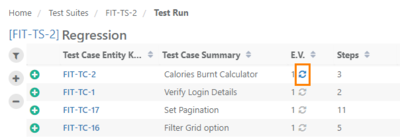
In case the test case updated with a new version, which is not associated with the execution, then the Version shows the Refresh icon in blue color.
Sync a Single Test Case to Latest Version
Click Refresh icon, to update the test case version to the latest one. Any changes related to test case parameters and test steps are updated. The execution status of the updated test case is reset to Not Run.
 |
Bulk Sync Test Cases to Latest Version
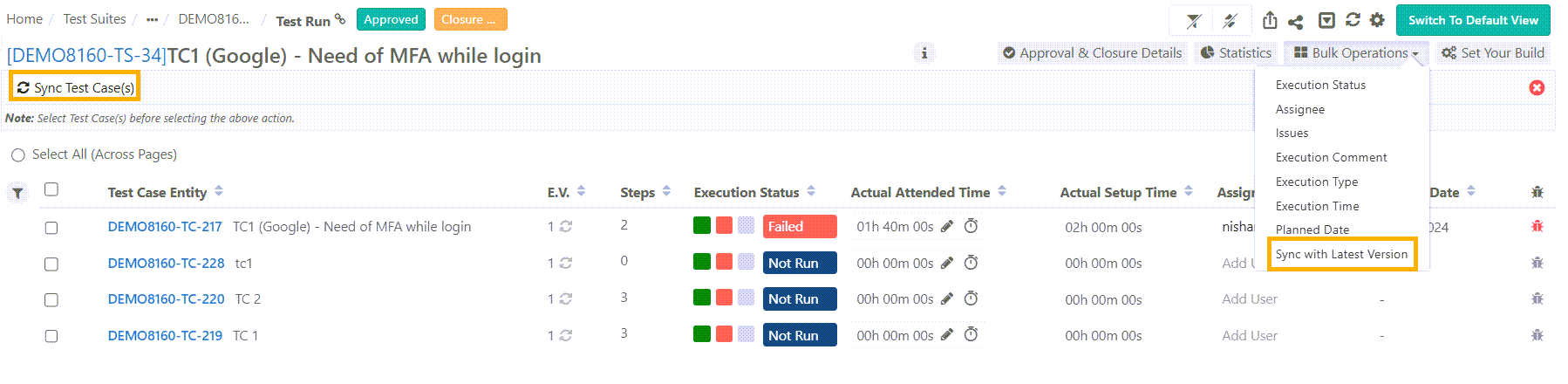
Sync multiple test cases to their latest version at once.
Open the drop-down menu and select Sync with Latest Version.
Select the test cases that you want to sync with their latest version.
Click .
 |
Logs
Test Result Logs
The test log provides the test run summary, indicates the results, and contains detailed information for each test operation. To view test result log, perform these steps:
 |
Open the Test Suite Execution Screen.
Click Cog (⚙️) icon and click Test Result Log.
Change Log
Track the changes done at the execution level from Change Log.
If any changes are done at test step level, then the step details are also displayed in the Action column. It helps users to identify which test step was modified and track the activities in the steps.